


Making sense of MAHA’s agenda
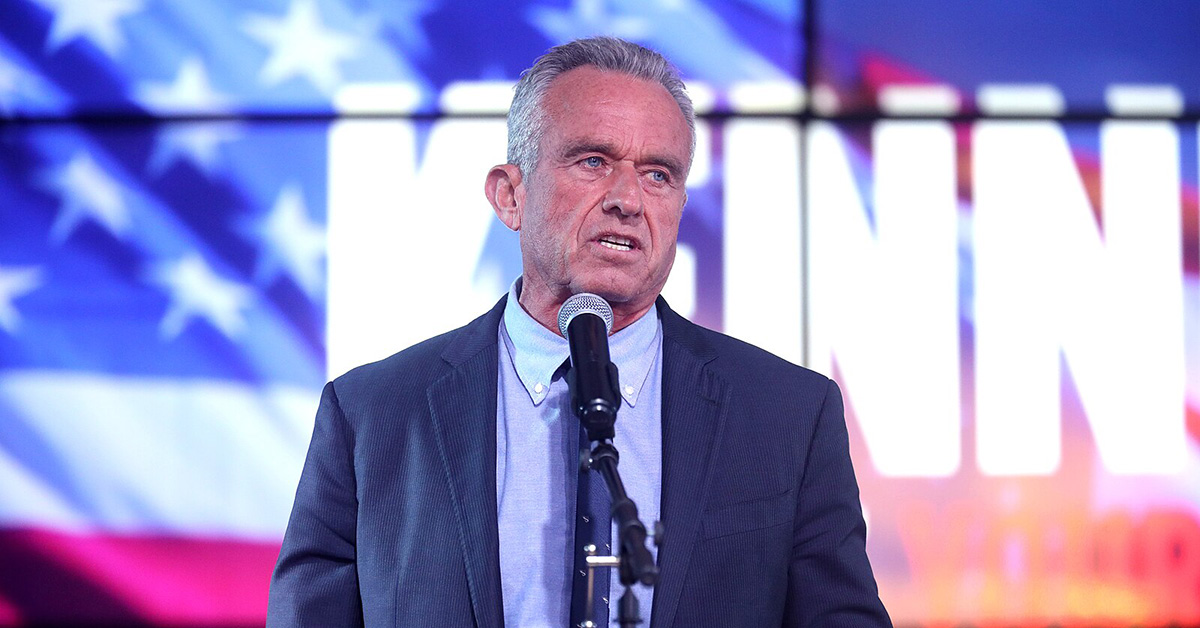
Ever wonder why the Make America Healthy Again movement believes what it does and who benefits? Hint: Follow the money.
By Lucia Hwang and Jane Thomason
National Nurse magazine - Oct | Nov | Dec 2025 Issue
Believing that childhood vaccines cause autism or that eating a lot of watermelon can act as a natural sunscreen may seem like just easily dismissible, crackpot conspiracy-theory thinking to registered nurses, but if you look closely at the underlying ideology of Robert F. Kennedy (RFK), Jr.’s Make America Healthy Again (MAHA) movement, you will uncover a deeper, more sinister agenda that not only seeks to destroy our nation’s public health programs, but challenges the very concept and legitimacy of public health. This critical subject is covered in a National Nurses United continuing education class titled “Trust and doubt in public health,” and we explore the main precepts here in this article.
Much of what RFK, Jr. and MAHA push seems at face value to be common sense: promote health by limiting exposure to environmental toxins, exercising, and eating whole foods while limiting ultra-processed foods. But leaders of MAHA largely view these only as individual goals, meaning a person’s health is wholly determined by their own choices, and what they personally did or did not do to stay or get healthy.
So, for example, you would think that RFK, Jr. and other MAHA leaders would approve of greater government regulations banning the most harmful agricultural pesticides or to achieve clean air and water, but that is not the case. In November, the Environmental Protection Agency approved new pesticides that contain PFAS “forever chemicals” for use on major U.S. food crops. That’s just one example of many. In MAHA’s worldview, it is up to the individual to “do their own research” and buy organic foods, install fancy reverse osmosis filtration systems to ensure safe drinking water, or outfit their houses with the latest HEPA air purification systems.
Prominent leaders of the MAHA movement, such as U.S. Health and Human Services Secretary Robert F. Kennedy, Jr. and Casey Means, the nominee for U.S. surgeon general despite never having finished her medical residency, have said on numerous occasions that with a healthy diet, exercise, and lifestyle, people can develop “personal immunity” to infectious diseases. Their beliefs fly in the face of germ theory, the more than 150-year-old scientifically accepted idea that some diseases are caused by pathogenic microorganisms.
Systemic barriers to health, such as whether a person’s socioeconomic status prevents them from living in a neighborhood where it is safe to exercise outdoors or breathe the air, or where there are no groceries that sell affordable fresh fruits and vegetables do not factor into MAHA thinking. MAHA also treats people who are born with congenital conditions, diseases, or disabilities as problems that must be cured or as unfortunate cases that could have been prevented if parents had only made the correct or better choice while the baby was in utero — such as refraining from taking Tylenol (even though there is no clear evidence that Tylenol use during pregnancy negatively impacts the fetus and complex genetic and environmental factors are the cause of many developmental conditions and chronic diseases).
“The areas of the United States that struggle with health need more support from the government and public health, like getting rid of food deserts, or supporting people in poverty,” said Amber Wiehl, a perioperative RN and CNA/NNOC board member who has taken the CE class. “The average person has no time or way to study where all the food we eat or buy comes from. I need regulation from my government to make sure there are no E.coli outbreaks and things like that to make us sick. No single person can actually figure out all the things without the help of regulating bodies that specialize in those different areas.”
RFK, Jr. and MAHA’s insistence that a person’s health is wholly dependent on their own choices ultimately carries moral overtones and judgment. MAHA says, if you develop a disease, you must have not done a good-enough job building your “personal immunity.” You must have made poor choices, the wrong choices, because you did not exert enough willpower and self control. MAHA says, therefore, you are bad and undeserving of health. If you are undeserving of health, MAHA leaders believe that government and society have no obligation to provide you health care services or other social programs, such as housing and food assistance, that we know significantly shape health. If you are undeserving of health, MAHA believes that it is acceptable or even in the natural order of things for you to die; society should not care or should even celebrate the dying off of “the weak” — a view that scarily smacks of eugenics and runs directly counter to nurses’ values.
For example, in a CBS News interview last April, RFK, Jr. said, “If you want to eat donuts all day or drink sodas, that’s your choice ... but in terms of, should you then expect society to care for you when you predictably get very sick.” He said these weren’t just “moral” but “pragmatic” questions. And, last year, we saw evidence of RFK, Jr. and Trump’s answer to this question when they worked with Congressional Republicans to pass H.R. 1, also known as the “One Big Beautiful Bill Act,” which, among other things, will devastate Medicare and Medicaid to fund tax cuts for billionaires. Some 17 million people will lose their health insurance and it’s estimated 51,000 more people will die unnecessarily each year because of these cuts. MAHA messaging played a key role in passing H.R. 1.
Amy Erb, an intensive care unit RN and National Nurses United vice president who also took the CE class, has a more nuanced view of “choice.” “For me I think that, yes, of course personal choices matter, but those choices are not made within a vacuum — they are made within a society that has a certain set of constraints: within institutions, within a certain health care system, in a country that already doesn’t have paid leave, and strong social supports. Choices are made within these social determinants of health. These determinants are powerful and they are not things that we choose. It’s so much easier to look down on and shame people for their choices and behaviors instead of taking a look at these systems in which everyone is making these choices.”
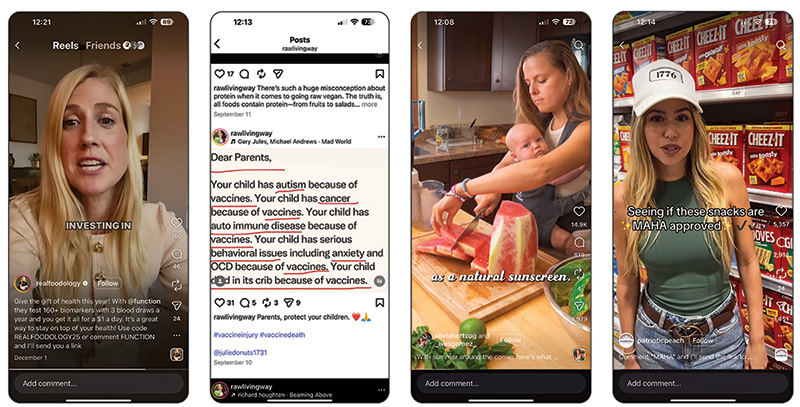
This championing of individual choice is a fundamental tenet of MAHA ideology and, carried out to its logical conclusion, means that individual preferences and opinions matter more than what is good for the collective, and more than what the scientific and medical community agrees is good for public health. In MAHA world, the individual’s Internet searches or belief in “trusted” social media influencers overrides the conclusions and advice of medical experts and scientists.
As a result, MAHA leaders take anti-public health positions, such as believing that vaccination against infectious diseases should not be recommended by the government, and that everybody should individually choose whether to get them or not — never mind that decades of medical research shows that mass immunization — at very low risk to the overall population — has dramatically reduced rates of these diseases and almost completely eliminated others.
This lack of confidence and trust in science and the medical establishment has also prompted the Trump administration, through RFK, Jr., to decimate and dismantle our national public health infrastructure. Since Trump and RFK, Jr. have taken office, they have slashed the staff, budgets, and work scope of the Centers for Disease Control and Prevention, HHS itself, the National Institutes of Health, the Environmental Protection Agency, the Food and Drug Administration, and the U.S. Department of Agriculture; fired all the qualified experts from the vaccine advisory committee; and stopped collecting and publishing data on a host of public health markers that the United States has historically recorded for generations. In their eyes, there’s no need to do science if individual beliefs and preferences are all that matter.
It’s important to note here that authoritarian and fascist forms of government often denigrate and suppress science and scientific experts because the practice of science and the scientific method is inherently democratic. Science encourages the asking of questions, of challenging assumptions, and the drawing of conclusions based on empirical data. In contrast, authoritarian and fascist figures demand adherence to a preset ideology and predetermined outcome.
“Science has historically challenged power by asking questions and making inquiries, and authoritarian governments don’t like those types of questions,” noted Erb. “If you don’t adhere to science, question authority, and throw questions into the mix, then it leaves the door open for rules and regulations based on ideology.”
This prioritization of individual choice over collective health is not just an unfortunate or selfish worldview, however, but actively reinforces a neoliberal, free market approach to U.S. society that says corporations should be allowed to operate however they like in pursuit of profits. Because if only individuals are responsible for their own health and our government is not responsible for people’s health as a whole through public health actions, then government does not need nor have the authority to regulate industries. While executives in various industries may not actually agree with or believe in the most outlandish proclamations by RFK, Jr. and Trump, such as acetaminophen causing autism, RFK, Jr. and MAHA serve their purposes well by deregulating business and limiting government oversight of their operations.
History has shown, however, that when government does not regulate industry, industry will not hesitate to cut corners, poison our environment, and sell us products that are known to be harmful to our health or kill us — all in the name of maximizing profit.
The CE course gives a few case study examples of this, examining how industry manipulated science, paid for and used front groups to shape public opinion, and stressed the importance of individuals’ right to choose to use known-to-be-harmful products — essentially delaying government regulations of their products and buying them time to continue raking in profits.
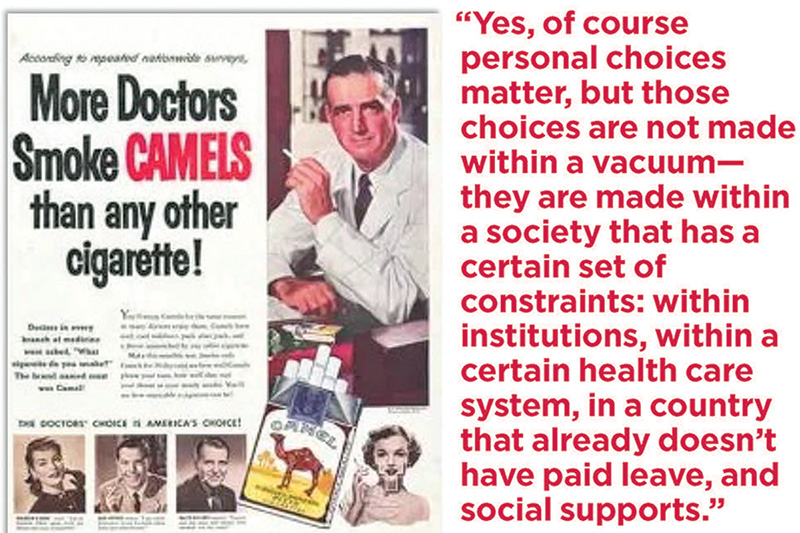
Three of the most famous examples of this are the tobacco industry, the chemical industry in selling products containing PFAS (“forever chemicals”), and the fossil fuel industry. In each case, these industries knew decades in advance of eventual public understanding that their products were harmful to humans and public health. To avoid regulation, they manipulated scientific evidence and even commissioned their own studies to raise questions, cast doubt, and insist on the inconclusiveness of science on the subject. They also manipulated public opinion by funding and founding front groups, paying for “trusted” sources, and launching media campaigns. Lastly, they insisted that the consumer should have the right to “decide for themselves” whether to use a harmful product or not.
“Playing it off as personal autonomy sounds great to some people. But how much of your choice is it really when the only meat that you can buy hasn’t been checked for bacteria and the processing plant hasn’t been inspected?” said Wiehl. “If you deregulate the systems, corporations have time and time again proved that they are not going to do the right thing. They don’t do what’s best except for their shareholders and the dollar. You have to have those checks and balances to keep us safe.”
In the case of MAHA, no one industry in particular benefits, but all industries win because, as explained earlier, if individual choice reigns supreme, there is no need for government to intervene via regulation, or decide what’s healthiest for the population as a whole.
The U.S. wellness industry, valued at upwards of $2 trillion in 2025, is a perfect example of this synergy between MAHA and deregulation. While MAHA is suspicious of Big Pharma and its relentless pursuit of profits, the pharmaceutical and medical devices industry is actually heavily regulated via the Food and Drug Administration (FDA). While we can argue about corporate influence over FDA independence, the FDA still does require drugmakers to undergo an approval process, clinical trials, and to meet safety and efficacy standards. In contrast, the wellness industry is largely unregulated: Nobody reviews products for safety and efficacy before they are sold to consumers. Claims that companies make are often misleading, there are no ingredient quality standards, there is no way to compare across brands — the list of problems goes on.
Not coincidentally, many of the most prominent leaders and influencers profit off of hawking all manner of products to “optimize health,” everything from continuous glucose monitoring subscription services, as surgeon general nominee Casey Means does, to weight loss products, as Centers for Medicare and Medicaid Services Director Mehmet Oz has. Many MAHA leaders are personally enriching themselves through promoting MAHA ideology and policies.
Corporations and conservatives are also actively funding the MAHA movement, either through backing of prominent leaders, influencers, or through political action committees such as MAHA Alliance, which has been largely funded by SpaceX and Elon Musk, and MAHA PAC. According to a September article in the Boston Globe, MAHA PAC used to be Kennedy’s presidential campaign PAC but switched gears and now funds marketing and communications to support Kennedy’s agenda, including paying writers for the MAHA Report newsletter, and content from social media creators.
In the face of this intentional sowing of mistrust and doubt in science, medicine, and public health, what can nurses do?
It turns out that nurses can still do a lot. Never forget that you are still the most trusted profession in the United States. Your neighbors, friends, family, and communities respect your opinion and listen to you.
Now that you understand MAHA ideology and its agenda, you can kindly explain as a health care provider all the ways that health is not solely determined by individual choices and how social determinants play a huge role. You can point out the disconnect between what MAHA espouses and the deregulatory policies RFK, Jr. and Trump are setting. You can organize with fellow nurses through many of our campaigns to fight back against the dismantling of public health, providing public comment, testimony, and stories to the media and joining us in our campaign to impeach RFK. Jr. You can help us boost National Nurses United social media posts on these topics by sharing them, or spread accurate information through your own profile. MAHA ideology must not go unchallenged.
Ultimately, we know that nurses will play a major role in the movement to win back the trust of the public in support of sound, science-based public health programs and policies.
“It comes down to education,” said Erb. “We have to keep educating and advocating for things like Medicare for All; living wages, environmental, housing, and workplace safety policies; and backing evidence-based health initiatives like vaccines and scientific research that will support the health of everyone, not just the wealthy and privileged among us.”
For more information about how to attend the CE course upon which this article is based, please visit nationalnursesunited.org/ce-classes.
Lucia Hwang is editor of National Nurse magazine and Jane Thomason is assistant director of health and safety for NNU.