Sign Up for Updates

Issues

Safe RN-to-Patient Staffing Ratios

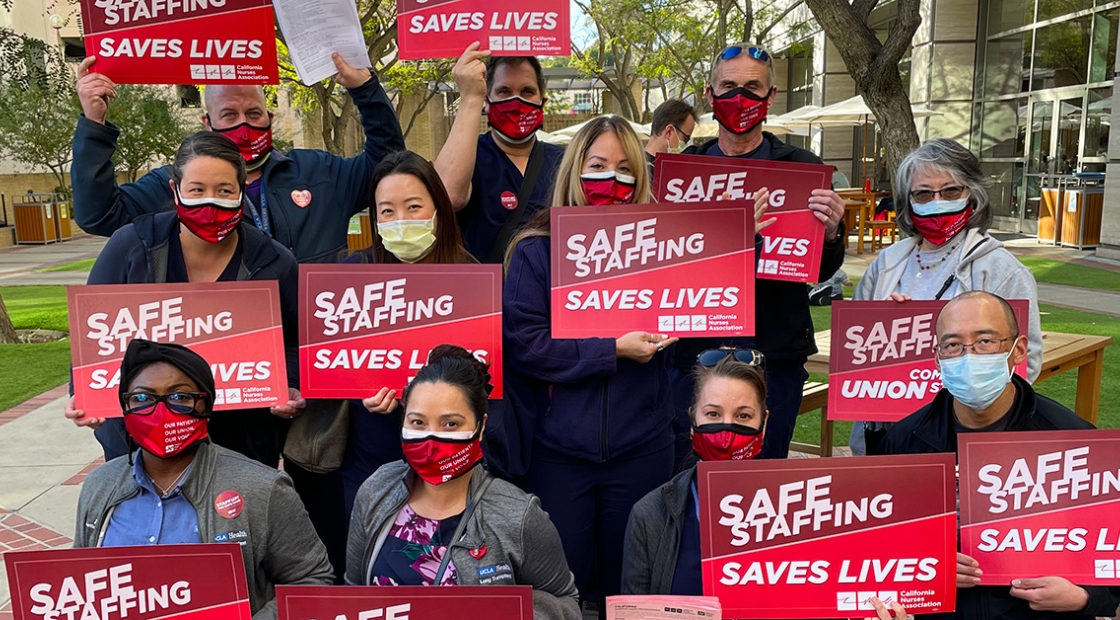
The Evidence is In: RN-to-Patient Ratios Save Lives

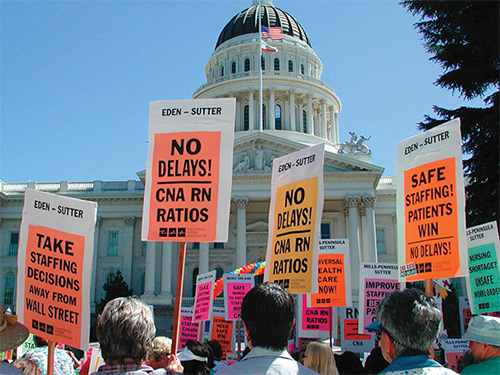
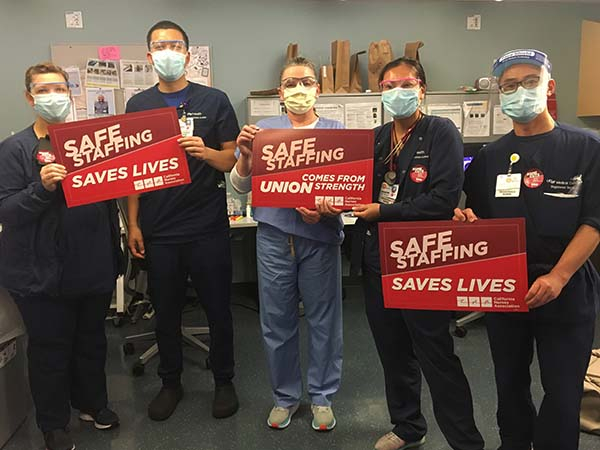
A major new study led by one of the nation's most eminent nurse researchers provides compelling new evidence that California's landmark RN-to-patient staffing law reduces patient mortality, assures nurses more time to spend with patients, and substantially promotes retention of experienced RNs. "This research documents what California RNs have long known - safe staffing saves lives. We see the effects every day at the bedside in improved patient care, an enhanced quality of life for patients, and nurses able to more safely practice the profession to which we have dedicated our lives," said Malinda Markowitz, RN, co-president of the California Nurses Association, a National Nurses United founding affiliate.

Read the full press release here.

pdf icon View the full study here

Ratios legislation supported by NNU

National Nursing Shortage Reform and Patient Advocacy Act - S. 992 (Boxer)

This bill establishes requirements for acute-care facilities to provide registered nurse staff based on the acuity of patients provided that minimum nurse-to-patient ratios for each unit are met at all times. Registered nurses shall also have the obligation to act in the exclusive interest of their patients, and the right to be patient advocates. 

pdf icon Read the full text of S. 992, introduced by Senator Barbara Boxer, May 12, 2011

pdf icon Read accompanying House Bill H.R. 2187 introduced by Rep. Jan Schakowsky - IL, June 2011

 Legislative Purpose

To address the nationwide shortage of hospital direct-care registered nurses; provide minimum safe patient protection standards — such as safe staffing ratios — for short-term and long-term acute-care hospitals in the United States; protect direct care registered nurse as patient advocate, create registered nurse education grants, and living stipends to recruit and retain direct-care registered nurses.

To create a hospital nursing service environment that will immediately attract new RNs and provide the foundation for ultimate restoration of the hospital direct RN workforce; and

To establish clearly defined, legally protected and enforceable duties and rights to direct-care registered nurses as advocates exclusively for the interests of patients.
Whistleblower protections that encourage patients, RNs and other healthcare workers to notify government and private accreditation entities of suspected unsafe patient conditions that will greatly enhance the health, welfare, and safety of patients.

The essential principles of staffing in the acute-care hospital settings must be based on patient’s individual acuity and needs; severity of conditions; services needed; and complexity surrounding those services.

Uniform National Professional Standards

1. Direct-Care Registered Nurse Patient Advocacy — Professional Duty of Patient Advocacy

  • Professional Obligation and Right; an RN has the professional obligation and therefore the right to act as the patient’s advocate.
  • Acceptance of Patient Care Assignments; the RN is always responsible for providing competent, safe, therapeutic, and effective nursing care to assigned patients.
  • Free Speech — Whistleblowing — Patient Protection; all direct-care RNs responsible for patient care in a hospital facility shall enjoy the right of free speech.

2. Minimum, Specific, and Numerical Direct-Care Registered Nurse-to-Patient Staffing Ratios by Clinical Unit for Acute-Care Hospitals

(a) Unit-specific direct-care RN-to-patient ratios for all shifts at all times.

A patient classification system (PCS) to determine additional staff, based on a National Acuity Tool developed by CMS.

(b) The Direct-Care RN-to-Patient Ratios

Intensive/Critical Care 1:2
Neo-natal Intensive Care 1:2
Operating Room 1:1
Post-anesthesia Recovery 1:2
Labor and Delivery 1:2
Ante partum 1:3
Well baby nursery 1:6
Postpartum couplets 1:3
Pediatrics 1:3
Emergency Room 1:3
ICU patients in the ER 1:2
Trauma patients in the ER 1:1
Step Down & Telemetry 1:3
Medical/Surgical 1:4
Other Specialty Care 1:4
Psychiatric 1:4
Rehabilitation Unit & SNF 1:5
Acute respiratory units 1:2
Burn units 1:2
Intermediate care nursery 1:4
Combined labor and delivery, and postpartum 1:3

(c) Direct-care LV/PN ratios study and its effect on patient care in hospitals.

3. Registered Nurse Workforce Initiative

Purpose: achieve immediate short-term mitigation and remedy of the nationwide nursing shortage.

(a) Basic Educational Assistance Benefit & Living Stipend

Creation of an education assistance entitlement program for eligible associate and baccalaureate degree applicants.

(b) Preceptorship and Mentorship Demonstration Project

To provide additional support to nurses entering the workforce

4. Enforcement

  • Action by the Secretary; Administrative action. The Secretary shall receive, investigate, and attempt to resolve complaints of violations.
  • Fines for Violating Employee and Patient Rights; acute-care hospital that violates employee or patient rights under this Act shall be subject to civil penalties - $25,000.00
  • Fines for Violating Employee and Patient Rights; any individual employed by a hospital that violates employee or patient rights under this act shall be subject to civil penalties - $20,000.00
  • Fines for violating ratios - $25,000.00

5. Prohibition Against Averaging of Ratios

6. Prohibition Against Imposition of Mandatory Overtime Requirements

7. Protection for the Refusal of Unsafe Patient Assignments

Background

The California Nurses Association's historic first in the nation Safe Staffing RN Ratios law took 12 years to win and has been in effect since January 2004 despite continued efforts of the hospital industry and Governor Schwarzenegger to have it overturned or otherwise weakened. When Governor Schwarzenegger decided to roll back CNA's staffing ratios and called nurses a "special interest who don't like me because I'm always kicking their butt," CNA ignited a broad grassroots movement that led to the sweeping November 2005 electoral defeat for the Governor's special election initiatives. Two days later, Schwarzenegger dropped his year-long fight against the ratios. Safe RN ratios have improved quality of care and nurse recruitment and retention in California hospitals. Ratios continue to improve with a 1:4 ratio in telemetry and specialty units scheduled to take effect in 2008. 

Download these Ratio Fact Sheets for more information:

RN-to-Patient Ratios Chart

pdf icon RATIOS BOOKLET 

pdf icon Ratios California RNs Speak Out

pdf icon Ratios and Patient Safety

pdf icon Ratios Solve RN Shortage

pdf icon Ratios: A Cost Effective Solution

pdf icon Ratios Make Chicago Tribune Headlines (NNOC)

pdf icon Ratios After a 12 Year Fight

pdf icon Ratios - AB 394 Text

pdf icon Ratio Basics By Unit 

pdf icon IHSP Report on Ratios Legislation - AB394:
California and the Demand for Safe and Effective Nurse-to-Patient Staffing Ratios
 

For additional information and resources, please visit the: Board of Registered Nursing


Back to Issues »